
Why Classic Billiard Rooms Still Make Heritage Hotel Stays So Memorable

Updated: Jul 23
collaborative guest post
Some hotel features look impressive in photographs but are quickly forgotten once the weekend is over. A classic billiard room is different. There is something about opening a heavy wooden door and finding a full-sized table beneath low lights, surrounded by dark panelling, old portraits and comfortable chairs, that makes a stay feel more distinctive.
It is not simply another hotel activity. A good billiard room gives a historic building a sense of purpose. It offers guests somewhere to spend an hour before dinner, escape a wet afternoon or settle a disagreement about who is the least terrible player.
We saw how well this could work during our stay at Heythrop Park, where the original panelled billiard room felt completely at home within the old manor house. It was not a novelty pushed into a spare corner. It was part of the character of the building.
A Room That Immediately Feels Different
Heritage hotels often have plenty of attractive spaces. There may be a drawing room, a library, a cocktail bar and enough sofas to accommodate a small royal succession crisis. Yet a billiard room tends to feel different because it has a clear purpose.
You do not have to wonder whether you are allowed to sit down or whether the room is reserved for afternoon tea. The table makes the invitation obvious. Pick up a cue, arrange the balls and have a game.
That sense of purpose helps the room feel relaxed rather than overly formal. Grand hotels can occasionally leave guests feeling as though they should whisper and avoid touching anything. A billiard room breaks down some of that stiffness. People talk, laugh, compete and occasionally blame the table for a shot that was clearly their own fault.
The room becomes memorable because guests actually use it. It is not just admired while walking from reception to the restaurant.
It Connects the Hotel With Its Past
A well-preserved billiard room also helps tell the story of a country house, manor or historic hotel without needing another display cabinet full of faded documents.
Billiards, snooker and similar table games have long been associated with clubs, private houses and hotels. When a table remains in an original room, it gives visitors an easy way to imagine how the building was used before en-suite bathrooms, spa packages and electronic room keys arrived.
This does not mean the whole experience has to become a costume drama. The appeal comes from being able to use a traditional space naturally. Guests can enjoy the history without being given a lecture before every shot.
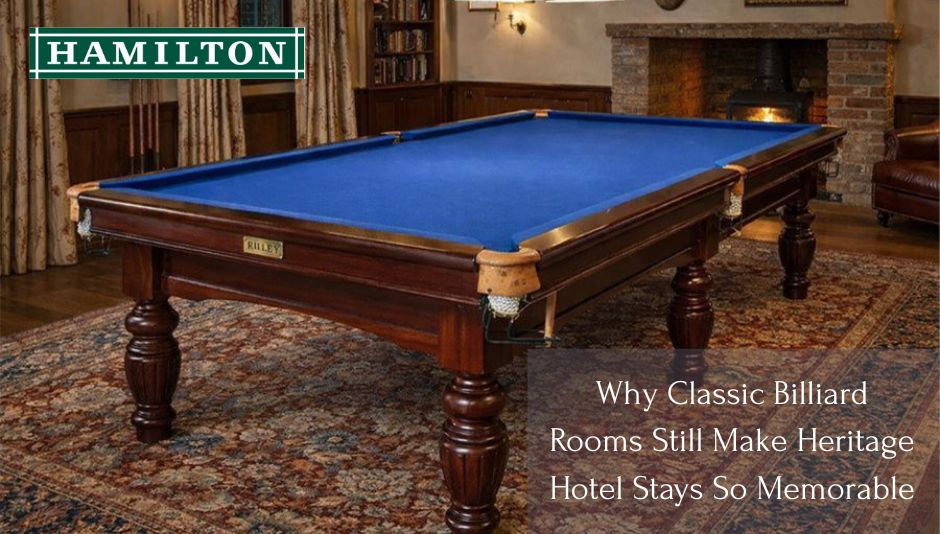
Older tables add to that atmosphere because they are substantial pieces of furniture in their own right. Decorative legs, dark timber, brass fittings and traditional scoreboards can suit a panelled room far better than a television screen or a row of modern gaming machines.
There has also been renewed interest in traditional indoor games more generally. Articles exploring why traditional games such as bagatelle are returning to modern homes show that this is not only about preserving the past. People still enjoy games that are sociable, tactile and easy to understand.
It Gives Guests Something to Do Without Organising Them
One of the best things about a billiard room is that it provides entertainment without making the hotel feel like a holiday camp.
Not everyone wants a packed activity schedule. Sometimes the pleasure of a weekend away is having nowhere urgent to be. A game of billiards or snooker fits neatly into that slower pace. Guests can play for ten minutes or stay for an entire evening. There is no start time, no instructor and no awkward moment when somebody is asked to volunteer.
This makes the room especially useful during unpredictable British weather. Gardens, terraces and walking routes may look tempting when a trip is booked, but rain can quickly redraw the itinerary. A billiard room gives a heritage hotel an indoor activity that still feels connected to the property rather than added as an afterthought.
It also works for different types of guests. Couples can play a casual game before dinner. Friends can turn it into a competition. Family members can teach younger players the basics. Even somebody who has no intention of picking up a cue can sit nearby with a drink and enjoy the atmosphere.

The Best Billiard Rooms Are Not Over-Designed
It is possible to try too hard. A room does not need every wall covered with cues, framed waistcoats and photographs of famous players. The strongest heritage billiard rooms usually allow the table and architecture to do most of the work.
Good lighting is essential. The playing surface needs to be properly illuminated, but the rest of the room can remain warmer and softer. Comfortable seating gives other guests somewhere to watch, while a side table or small bar area helps the room work as a social space.
The table also needs enough clearance around it. A beautiful room soon becomes frustrating if players have to shorten every shot because a bookcase, fireplace or large plant is in the way. Cues, balls and rests should be in good condition, and the cloth should look cared for rather than resembling something recovered from a village hall cupboard.
Small details matter. A traditional scoreboard, a well-made cue rack and a few carefully chosen prints can create atmosphere without turning the room into a theme park.
Most importantly, the room should feel open and usable. A pristine table with a sign telling guests not to touch it is simply a large green ornament.
A Social Space That Does Not Depend on Screens
Hotels now have to compete with the entertainment guests carry in their pockets. It is easy to return to a room after dinner and spend the evening scrolling, watching television or checking messages that could certainly have waited until Monday.
A billiard room offers a gentle reason to stay downstairs.
The game encourages conversation because it leaves space between turns. It is competitive, but usually not so demanding that nobody can speak. It also gives a group a shared focus, which is helpful when the conversation has reached that dangerous stage where somebody starts discussing the journey home.
This is one reason classic games rooms still feel relevant. They provide something many travellers want from a hotel stay: a change from everyday routines. The building, the table and the slower rhythm of the game all contribute to that sense of being somewhere else.
Recreating the Heritage Hotel Look at Home
A memorable hotel often sends guests home with ideas. Sometimes it is a paint colour, a particularly comfortable armchair or the sudden conviction that breakfast should always include pastries. A good billiard room can have the same effect.
The first consideration is space. Before choosing a table, it is important to allow room for players to move and use a cue comfortably on every side. Love Chic Living has a great guide to designing a games room around a snooker table can be useful, particularly when planning lighting, seating and storage as well as the table itself.
The style of the room does not have to be completely traditional. Dark green or navy walls, timber furniture and warm lighting can create a country-house feel, but a simpler modern room can work just as well. The table should suit the proportions and character of the space rather than overwhelm it.
There is also more choice than many people realise. Full-sized tables suit larger dedicated rooms, while smaller models and dining-table conversions can work in more flexible spaces. Specialist snooker table manufacturers, Hamilton Billiards offer a range of sizes and styles, including handmade, bespoke and restored antique options.
For homeowners trying to capture the atmosphere of a heritage hotel, the table is worth treating as furniture rather than equipment that needs to be hidden away. The wood finish, leg design, cloth colour and lighting all affect how the room feels.
Companies such as Hamilton Billiards can also help with made-to-order designs and antique restoration, which is useful when the aim is to create something that suits the room rather than simply filling it.
Final Thoughts
A classic billiard room makes a heritage hotel stay memorable because it brings together history, atmosphere and something enjoyable to do.
It can make a grand building feel less formal, give guests an alternative to organised entertainment and turn an unused room into one of the most talked-about parts of the stay. The best examples do not feel staged. They feel as though the table has always belonged there and will still be there long after the latest hotel trend has disappeared.
We may visit a hotel for the location, the food or the spa. But it is often the unexpected spaces that remain in the memory. A panelled billiard room, a quiet game before dinner and one wildly overconfident attempt at a long pot can become the detail that defines the whole weekend.


