
Designing a Sanctuary: Relaxing Bedroom Ideas for Mental Wellbeing

collaborative guest post
Your bedroom environment affects far more than just how quickly you drift off. Environmental psychology demonstrates that indoor spaces directly shape our cortisol levels, mood, and cognitive health. A thoughtfully designed bedroom serves as a sensory reset—lowering stress, regulating your nervous system, and supporting deep, restorative sleep.
By combining calming colour palettes, daylight optimisation, biophilic design, and tactile natural fabrics, you can transform your bedroom into a true sanctuary for mental wellbeing.
Relaxing master bedroom design with soft sage green walls, natural light, and a wooden bed frame
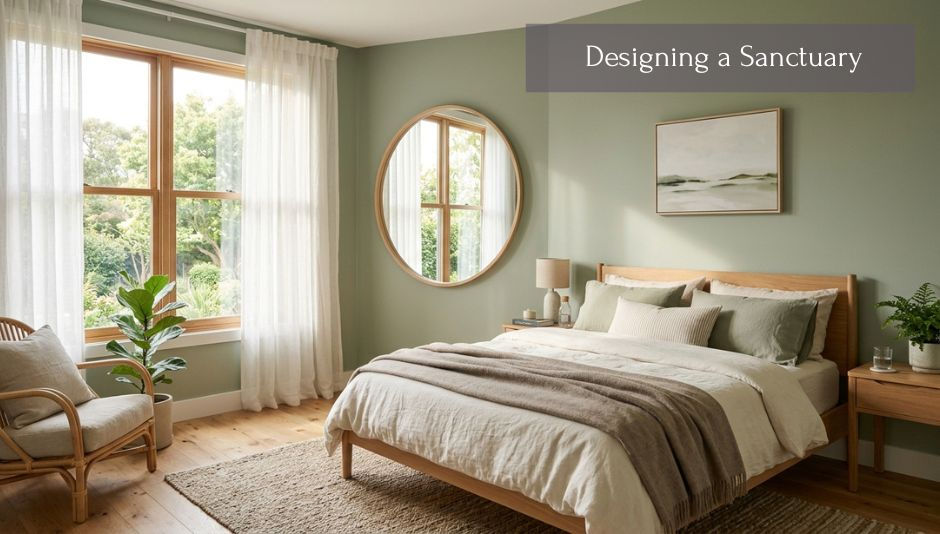
Pictured: A tranquil bedroom sanctuary featuring matte sage green walls and diffused natural daylight to encourage visual calm and lower stress levels.
1. Choose Calming Colour Schemes to Rest the Mind
Wall colour sets the emotional baseline of your room long before you choose furniture or soft furnishings. The right shades quiet visual noise, helping your brain transition from daytime alertness to night-time rest.
Palette Category | Psychological Effect | Recommended Tones |
Soft Neutrals | Airiness, visual calm, warmth | Oatmeal, latte, cream, warm pebble |
Gentle Pastels | Low visual noise, serenity | Lavender, powder blue, blush, mint |
Cool Blues & Greens | Lowers heart rate & cortisol | Sage green, slate blue, ocean mist |
Earth Tones | Grounding, intimacy, balance | Natural taupe, terracotta, forest |
Soft Neutrals and Restorative Pastels
Lighter, warm-toned foundations enhance ambient daylight, making rooms feel airy and spacious:
Warm Cream & Latte: Offer a cocooning, gentle feel that avoids the cold, clinical impression of stark brilliant white.
Soothing Pastels: Soft shades like lavender, powder blue, and blush pink actively reduce mental friction. Lavender promotes tranquil stillness, while soft sage and mint green introduce a subtle, restorative freshness.
The Physiology of Cool Blues and Greens
Blues and greens are clinically proven to promote physical relaxation, contributing to lower blood pressure and heart rates:
Sky & Slate Blues: Evoke feelings of stability and open skies, ideal for quiet reading nooks and rest zones.
Sage & Muted Forest Greens: Mirror the natural world. Green tones lower cortisol (the body's primary stress hormone), promoting deep psychological recovery.
Colour Safety Tip: Avoid high-saturation primary colours like bright red, acid yellow, or neon pink across large surfaces. These energetic hues stimulate the nervous system and increase heart rate, making sleep transition difficult.
2. Maximise Natural Light & Optimise Evening Illumination
Daylight exposure regulates your circadian rhythm—your body’s internal 24-hour master clock. Bright morning daylight triggers daytime alertness and boosts night-time melatonin production, ensuring deeper, uninterrupted sleep.
Lighting Strategy | Implementation & Key Elements |
Daytime Exposure | • Bed near window for natural light • Sheer curtains to diffuse sunlight • Mirrors placed opposite windows |
Evening Transition | • Low illuminance (<100 lux) • Warm colour temperatures (2700K) • Dimmable ambient lamps & sconces |
Strategic Layout and Light Diffusion
Position Your Bed Near Windows: Maximising daylight exposure during the first hours of waking helps synchronise your sleep-wake cycle.
Layer Sheer Curtains & Light-Filtering Blinds: Translucent sheer drapes soften harsh glare while flooding the room with natural light. Pair them with blackout drapes for complete dark during sleep hours.
Amplify Daylight with Mirrors: Position a large wall mirror directly opposite or adjacent to a window to reflect outdoor views and bounce natural daylight deep into darker corners.
Warm, Dimmable Evening Lighting
Excessive, cool-toned overhead lighting during evening hours suppresses melatonin production. Transition to warm, low-level lighting (around 2700 Kelvin and under 100 lux) two hours before bed to signal to your brain that it is time to wind down.
3. Bring Nature Indoors with Biophilic Design
Biophilic design bridges the gap between modern indoor living and our biological need for connection with nature. Integrating natural elements in the bedroom reduces heart rate variability, improves mood, and lowers stress.

Pictured: Biophilic design in practice: Pairing a solid natural wood bed frame with air-purifying houseplants like Sansevieria helps regulate evening cortisol and room humidity.
Air-Purifying Bedroom Plants
Houseplants add organic texture while actively improving indoor air quality:
Snake Plants (Sansevieria): Convert carbon dioxide into oxygen continuously throughout the night, boosting room air quality while you sleep.
Peace Lilies: NASA-certified air purifiers that filter ambient toxins like formaldehyde and benzene, thriving even in lower-light corners.
Pothos & Spider Plants: Extremely low-maintenance varieties that trail effortlessly off high floating shelves.
Natural Wood, Stone, and Botanical Aromas
Tactile Wood & Clay: Anchoring the room with natural timber—such as a solid oak frame from Bedstar—creates a tactile, grounding atmosphere while helping regulate ambient room humidity.
Therapeutic Aromatherapy: Incorporate natural essential oils via cold-air diffusers or pillow sprays. Lavender, frankincense, vetiver, and chamomile have mild sedative qualities that deepen breathing and quiet racing thoughts.
4. Select Tactile, Breathable Fabrics for Maximum Comfort
Sleep quality is heavily dependent on thermal regulation. Synthetic materials trap moisture and heat, leading to restless night-time waking. Natural, breathable fibres keep body temperature stable throughout the night.
Fabric Type | Breathability & Performance | Best Used For |
Pure Linen | High moisture-wicking & airflow | Warm sleepers & summer bedding |
Organic Cotton | Soft, hypoallergenic & breathable | All-year fitted sheets & pillowcases |
Natural Wool | Excellent thermal regulation | Chunky throws & bedside area rugs |
Bamboo Viscose | Ultra-soft, anti-bacterial | Sensitive skin & hot climates |
Layering Soft Furnishings

Pictured: Tactile layering: Combining breathable washed linen duvet covers with natural wool throws helps maintain optimal body temperature throughout the night.
Mix tactile textures to make your bed feel visually inviting and physically comfortable:
Base Sheets: Crisp organic cotton or washed linen.
Drapes & Throws: Pin-tucked velvet cushions, woven wool throws, and waffle-knit blankets add depth without introducing visual chaos.
Underfoot Comfort: Place a soft wool or deep-pile sheepskin rug alongside the bed to provide a warm, tactile surface for bare feet every morning. Avoid scratchy jute or sisal in bedroom spaces.
5. Create a Clutter-Free, Functional Layout
Visual clutter occupies mental bandwidth. Studies show that individuals sleeping in cluttered environments exhibit higher cortisol levels and experience greater difficulty falling asleep.

Pictured: Clutter-free peace of mind: An integrated ottoman bed frame from Bedstar keeps spare bedding hidden away, keeping surfaces clear as night falls.
Smart Storage & Daily Habits
Integrated Ottoman Beds: Space-saving options like Bedstar's gas-lift ottoman beds utilise the full footprint beneath your mattress, keeping seasonal duvets, extra pillows, and clutter completely out of sight.
Clear Surfaces: Keep bedside tables clear of clutter. Limit nightstand items to essential items: a warm lamp, a book, and a glass of water.
Zone the Layout: Keep work devices entirely away from your sleeping space. If a desk must remain in the bedroom, use a lightweight screen or ceiling curtain to hide it from view when night falls.
Daily Wellbeing Tip: Making your bed every morning creates a quick, positive sense of accomplishment. Research shows that regular bedmakers are significantly more likely to report getting a good night's sleep consistently.
Conclusion: Building Your Personal Retreat
Creating a relaxing bedroom is not about following fleeting design trends—it is about curating an environment that supports your physical and mental health.
Start small: introduce an air-purifying plant, switch your evening bulbs to a warm 2700K tone, or clear clutter off your bedside table. By making thoughtful, intentional choices, you can turn your bedroom into a peaceful sanctuary that promotes deep rest and mental clarity every day.


