
What Makes a Mattress Comfortable? Key Features Every Homeowner Should Know

collaborative guest post
We spend about a third of our lives asleep, and yet most people put more research into a new phone than into the thing they lie on every night. Part of the problem is that “comfortable” doesn’t mean the same thing to everyone. What feels heavenly to your neighbor might feel like sinking into wet sand to you.
Rather than chasing whatever a mattress ad promises, it helps to know the actual features behind real comfort — support, firmness, material, and the base underneath it all. Here’s what actually matters before you buy. Here are the key features that determine how comfortable a mattress really feels.
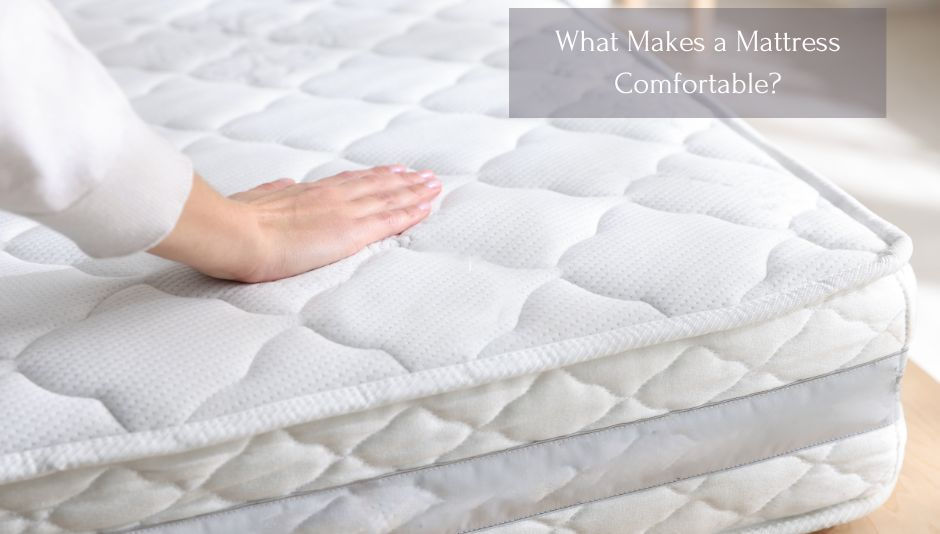
1. Pressure Relief Is Essential for Long-Term Comfort
It’s tempting to equate comfort with softness. But a mattress that gives too much lets your hips and shoulders sink further than they should, and your spine ends up curved instead of straight. Real comfort comes down to support — keeping your spine roughly aligned whether you’re on your back, your side, or your stomach.
A well-built mattress spreads your body weight evenly instead of letting it pile up on a few pressure points. That’s also why side sleepers tend to want a little more give at the shoulder and hip, while back sleepers usually need firmer, more even support under the lower back.
2. Firmness Should Match Your Body, Not a Trend
Firmness is one of those things people assume is universal, when really it comes down to your body weight and how you sleep. Lighter sleepers often prefer medium or medium-soft mattresses, since a very firm surface won’t get enough give to relieve pressure points. Heavier sleepers usually need a firmer core with a thicker comfort layer on top, or they’ll sink too far and throw the spine out of line.
Side sleepers tend to do well on medium-firm mattresses that cushion the shoulders and hips, and stomach sleepers generally need something firmer so the midsection doesn’t dip too low. None of this is guesswork — it’s just physics applied to your particular body.
3. The Material Matters More Than People Expect
Cold foam is point-elastic and moulds closely to the body, which is why manufacturers often build it into multiple support zones for the shoulders, back, and legs. Pocket spring mattresses breathe well, since air can move between the individual coils, which helps if you tend to overheat at night.
Visco and gel foam layers relieve pressure and hug the body’s contours, which is why they’re popular with people dealing with shoulder or hip pain. None of these is the objectively “best” choice — it depends on how warm you sleep, how much bounce you like, and honestly, how much money you want to spend.
4. The Right Mattress Can Support Better Sleep and Back Health
A great mattress can lose most of its benefit if it’s sitting on the wrong base. Slats that are too rigid won’t flex when you move, which cancels out any zoning the mattress was designed with. Slats set too far apart, on the other hand, can let the mattress sag exactly where it shouldn’t.
It’s one of the most overlooked parts of buying mattresses, and it’s something the team at Betten-ABC pays close attention to — they’ve spent more than 20 years matching customers with the right slatted base and topper instead of treating the mattress as a stand-alone purchase.
5. The Research Backs This Up
This isn’t just personal preference dressed up as advice. A 2015 systematic review of controlled trials published in Sleep Health: Journal of the National Sleep Foundation found that medium-firm mattresses improved sleep quality by roughly 55 percent and reduced back pain by about 48 percent in patients with chronic low back pain.
That’s a striking result for something as simple as swapping out a worn-out mattress, and it’s a good reminder that this is a health decision as much as a comfort one.
What a Trustworthy Buying Experience Actually Looks Like
Because comfort is so personal, how you buy matters almost as much as what you buy. A real trial period lets you sleep on a mattress in your own bed for weeks, which tells you far more than five minutes of lying on a showroom floor in your jacket ever could. Honest advice from someone who actually knows the terminology — firmness zones, pocket spring counts, that sort of thing — saves you from guessing.
And if you’ve got an oddly shaped bed, a camper, or a boat, being able to order a mattress custom-built to your exact measurements means you’re not stuck compromising on comfort just because your frame doesn’t match a standard size.
Final Thoughts
A comfortable mattress isn’t the softest one on the shelf, and it isn’t necessarily the most expensive one either. It’s the one that matches your body, your sleep position, and the base it sits on. Take the time to understand these features before you shop, because a quick five-minute test in a showroom tells you almost nothing about how a mattress performs after three weeks of actual sleep.
If you’re updating your bedroom, treat the mattress, base, and topper as one connected system rather than three separate purchases — that’s really what decides how well you sleep, night after night.


